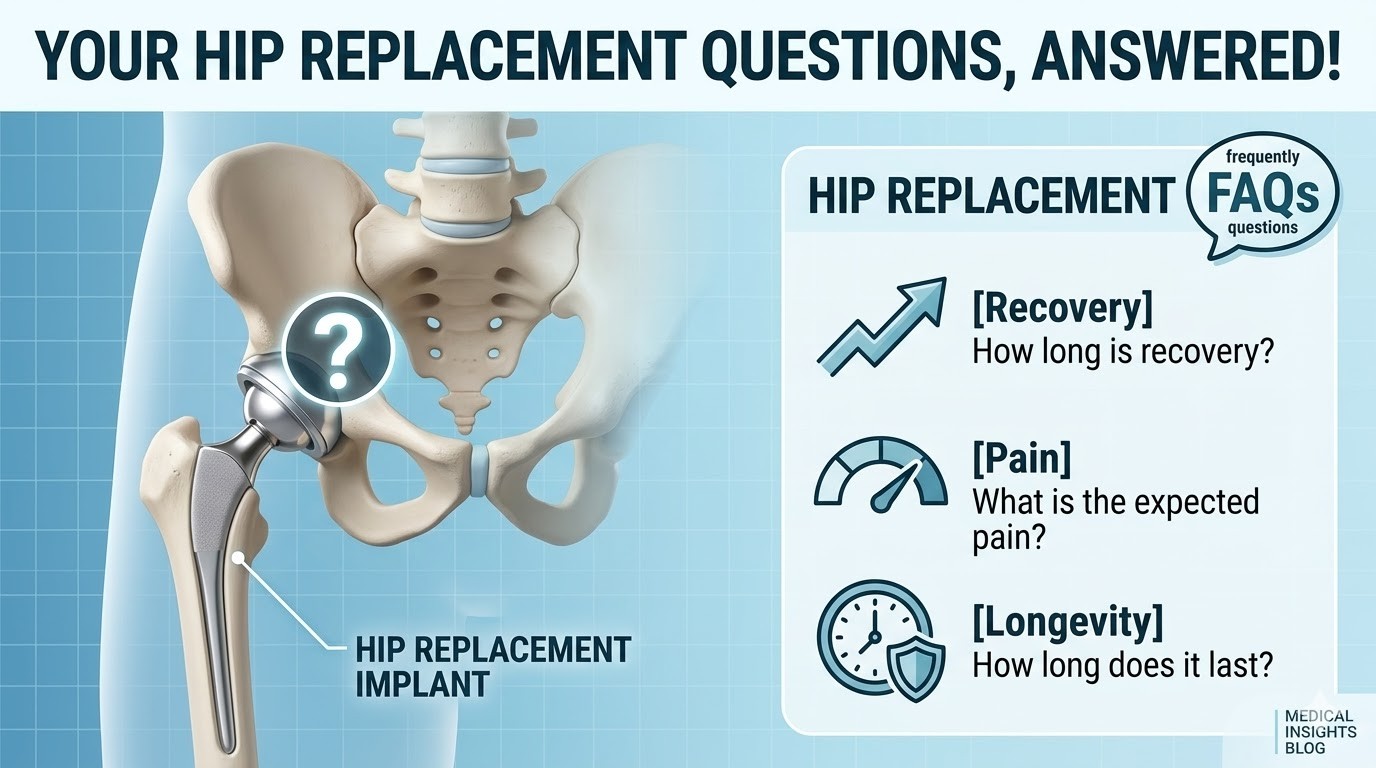
Everything you need to know about hip replacement surgery, recovery tips, what to expect, and answers to the most common patient questions.
Hip replacement surgery is one of the most successful operations in modern medicine. This guide answers the questions my patients ask most frequently, helping you understand what to expect during your recovery journey.
Recovery Timeline & Milestones
How long will I stay in hospital?
Most patients stay 1-2 days, with many going home the same day. According to Johns Hopkins Medicine, modern hip replacement surgery allows most patients to start walking and go home on the day of surgery. If you have a preexisting heart or lung condition, or if no one can help at home, you may stay overnight for monitoring.
When can I start walking?
You will typically take your first steps 5-6 hours after surgery with assistance. Bed rest is not recommended as moving your new joint prevents stiffness. Most patients progress from a walker to a cane within 2-4 weeks.
How long until full recovery?
Most normal activities can be resumed in 10-12 weeks. Complete bone healing and maximum strength typically take 3-6 months. Some patients continue to notice improvements for up to a year as muscles strengthen and adapt.
Recovery Milestones
Milestone | Timeline |
First steps with walker | Day of surgery (5-6 hours post-op) |
Hospital discharge | 1-2 days |
Driving (left hip) | 1-2 weeks |
Driving (right hip) | 3-4 weeks |
Return to office work | 2-4 weeks |
Walking without aids | 4-6 weeks |
Full daily activities | 10-12 weeks |
Complete recovery | 3-6 months |
Daily Activities & Restrictions
When can I drive again?
If surgery was on your right hip, expect 3-4 weeks before safe driving. For left hip surgery, you may drive in 1-2 weeks if you have an automatic transmission. You must be off narcotic pain medications and able to react quickly in an emergency.
When can I shower or bathe?
You can shower immediately with a waterproof dressing over your incision. Avoid soaking in baths, swimming pools, or hot tubs until your incision is fully healed (typically 6 weeks) to reduce infection risk.
Do I have movement restrictions?
Great news! With the direct anterior approach that I use, you have almost no dislocation precautions.
Unlike the traditional posterior approach which requires strict movement restrictions for 6-12 weeks, the anterior approach preserves the posterior hip muscles and capsule that provide stability. This results in dislocation rates of only 0.5-1.4% (compared to 3-4% with posterior approach).
The only precaution:
Avoid hip hyperextension – This means don't extend your leg too far behind your body (like in a deep backward lunge or lying flat on your stomach with legs stretched back). This position can stress the front of the hip where the surgical approach was made.
You CAN freely:
Bend your hip past 90 degrees
Cross your legs
Twist and rotate your hip
Sleep on your side or in any comfortable position
Sit in low chairs
Tie your shoes and pick things up from the floor
What equipment will I need at home?
With the anterior approach, special equipment is generally not required. However, these items may add comfort during early recovery:
Walker or cane (provided by hospital)
Ice packs for swelling
Shower chair (optional, for safety)
Raised toilet seat (optional, for comfort)
Travel & Flying
When is it safe to fly after hip replacement?
Short-haul flights (under 4 hours) may be possible after 2-4 weeks. For long-haul flights, many surgeons recommend waiting 6-12 weeks due to blood clot risk from prolonged sitting. The American Association of Hip and Knee Surgeons notes that with appropriate precautions, most patients can travel safely within a few weeks.
How do I prevent blood clots when traveling?
Wear compression stockings
Take blood thinners as prescribed
Walk or move every 1-2 hours
Do ankle pumps and calf exercises while seated
Stay well hydrated with water and juice
Request an aisle seat with extra legroom
Avoid alcohol and caffeine which cause dehydration
Will my hip implant set off airport security?
Yes, metal implants typically trigger metal detectors. Simply inform the TSA agent that you have a hip replacement. You don't need a doctor's note, though some patients carry an implant card for convenience.
Intimacy After Surgery
When can I resume sexual activity?
Generally 4-8 weeks after surgery, once you feel comfortable and your surgeon gives approval. Soft tissue healing takes about 3 months, so listen to your body. Studies show 44% of patients report improved sexual satisfaction after recovery due to elimination of hip pain.
Are there position restrictions?
With the anterior approach, you have much more freedom than traditional hip replacement patients. The only consideration is avoiding positions that put your hip into extreme hyperextension (leg stretched far behind your body).
Positions that are generally fine:
Spooning (side-lying)
Missionary
Seated positions
Standing positions
Most other comfortable positions
Simply avoid positions where your operated leg is stretched far behind you. If any position causes discomfort, adjust accordingly.
Your Hip Implant
How long will my hip implant last?
Modern hip implants typically last 20-30 years. Registry data shows 85% survive at 20 years, and 58% last more than 25 years. Factors affecting longevity include your age at surgery, activity level, body weight, and the surgical technique used.
What are modern implants made of?
Today's implants combine metal (titanium or cobalt-chromium), highly durable plastic (cross-linked polyethylene), and ceramic. This combination provides excellent wear resistance with minimal friction. Ceramic-on-ceramic bearings are particularly durable and can last 25-30 years.
What signs indicate I might need revision surgery?
Persistent or worsening pain
Hip instability or feeling like it might give way
Grinding, clicking, or unusual noises
Difficulty walking
Dislocation of the hip
Exercise & Sports
What exercises are recommended?
Low-impact activities (recommended):
Walking (excellent for recovery)
Swimming and water aerobics
Stationary cycling
Golf
Doubles tennis
Dancing
High-impact activities (generally not recommended):
Running or jogging
Basketball
Soccer
Martial arts
High-impact aerobics
Exercise note regarding hip hyperextension:
Be cautious with exercises that involve extreme hip extension such as deep lunges with the operated leg back, prone leg lifts, or yoga poses like cobra or upward-facing dog. Modify these movements to avoid stretching your leg too far behind your body.
Important: Research shows that 40% of patients achieve high activity levels (including jogging) at 2 years, and this did NOT increase the risk of revision surgery. Discuss your specific goals with your surgeon.
Warning Signs to Watch For
Contact your surgeon immediately if you experience:
Warning Sign | Possible Concern |
Fever above 101.5°F (38.6°C) | Infection |
Increasing redness, warmth, or drainage from incision | Wound infection |
Severe leg swelling not relieved by elevation | Blood clot (DVT) |
Calf pain or tenderness | Blood clot (DVT) |
Sudden severe hip pain or feeling of instability | Possible dislocation |
Inability to bear weight after initially improving | Hardware issue |
EMERGENCY: Call 911 immediately for sudden shortness of breath, chest pain, or coughing up blood, as these may indicate a pulmonary embolism.
Common Post-Operative Concerns
Is swelling normal?
Yes, swelling is expected and can extend down the entire leg. Elevate your leg above heart level when resting, use ice packs, and wear compression stockings. Significant swelling typically resolves in 10-14 days, though mild swelling may persist for several months.
I'm constipated. Is this normal?
Very common due to anesthesia and pain medications. Increase fluids and fiber, use stool softeners, and stay as mobile as possible. Contact your doctor if you haven't had a bowel movement in 3-4 days.
I'm having trouble sleeping. What should I do?
Sleep disturbances are very common in early recovery. Sleep in whatever position is comfortable for you – with the anterior approach, you don't need to worry about sleeping positions. Take pain medication 30 minutes before bed if needed. This typically improves over the first few weeks.
Do I need antibiotics before dental work?
Always inform your dentist about your hip replacement. The need for antibiotics before dental procedures is debated. Current guidelines suggest it may be appropriate for some patients, especially in the first two years. Discuss with both your surgeon and dentist
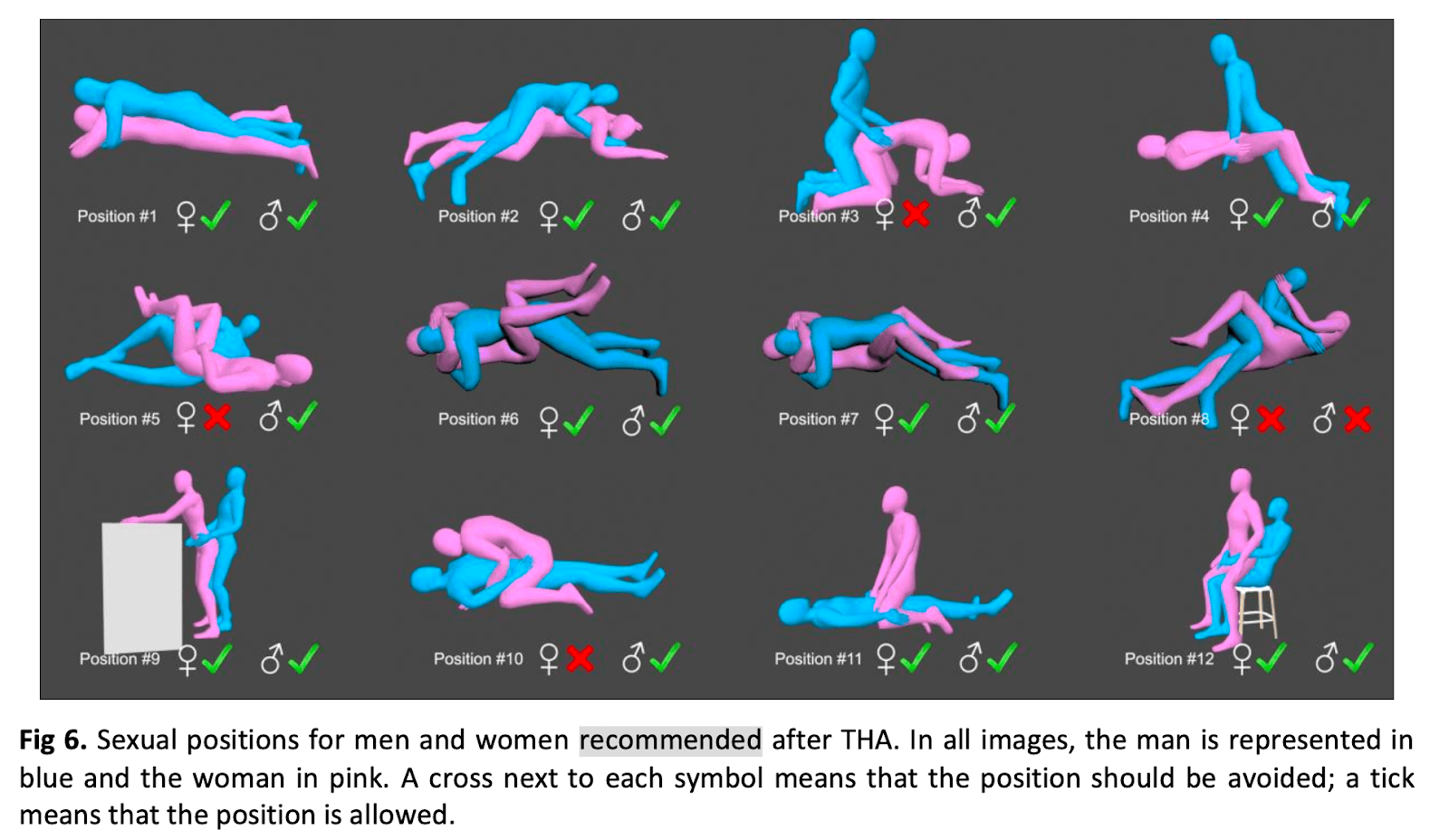
What positions can I do with my partner?
Below are different positions for Men & Women. X-means avoid & check means relatively safe. It may be different for Male and Female in the position check the reference below.
Quick Reference: Movement Freedom
With the Direct Anterior Approach:
✓ You CAN bend your hip freely
✓ You CAN cross your legs
✓ You CAN sit in low chairs
✓ You CAN sleep in any comfortable position
✓ You CAN tie your shoes and pick things up
✗ AVOID hip hyperextension (stretching your leg far behind your body)
Your Healthcare Team
Recovery is a team effort. Your care team includes your orthopedic surgeon, physical therapist, primary care physician, and support at home. Don't hesitate to reach out with questions or concerns.
Dr. Jonathan Flordelis, MD
Orthopedic Surgeon | Hip & Knee Specialist
401 Robinsons Cybergate Cebu City
Across Chong Hua Hospital Cebu City
Clinic Hours: Monday & Friday, 10am - 3pm
Secretary Joy: 09959537978 or 09228117757
Website: drjof.framer.ai