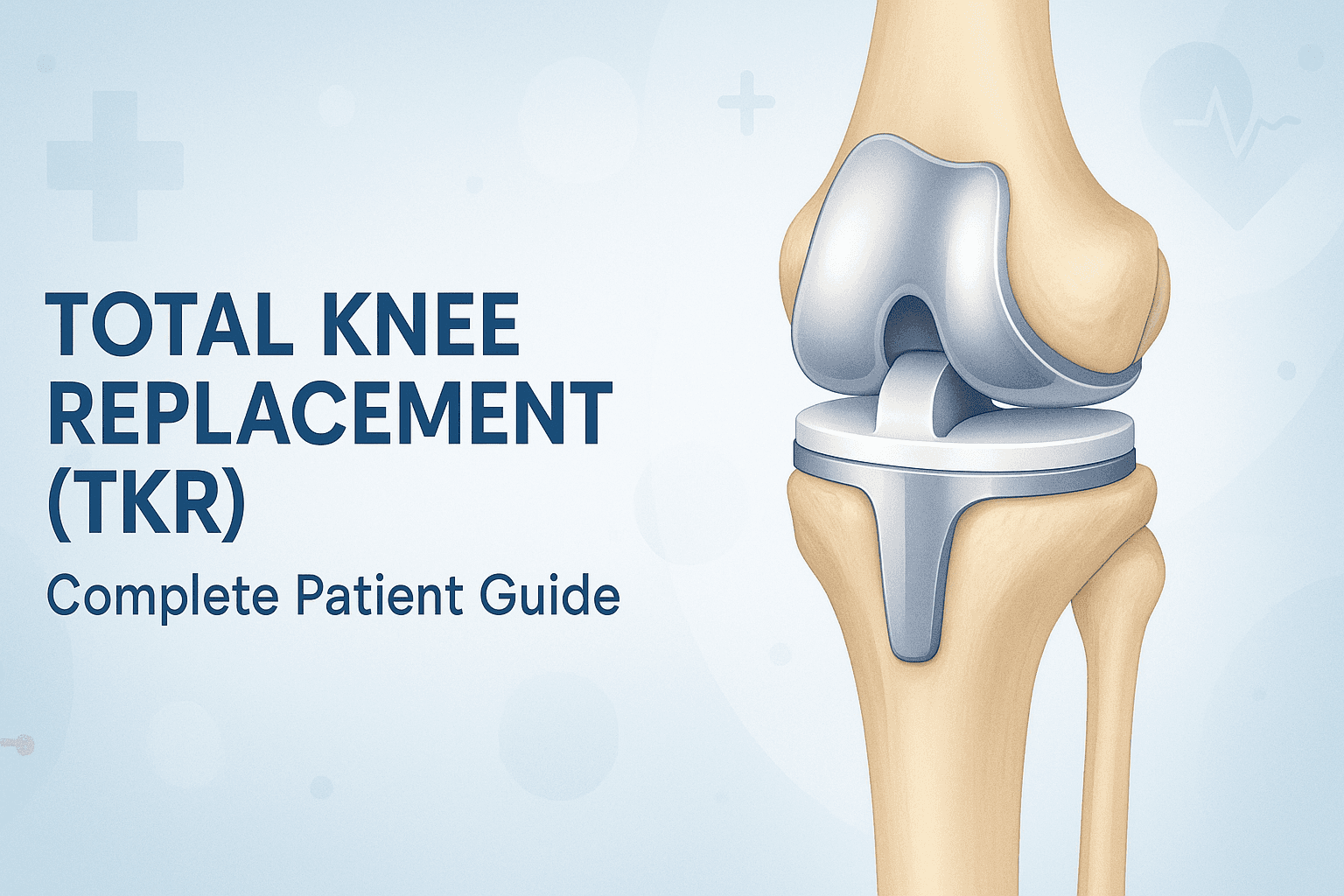
Total knee replacement surgery FAQ: recovery timeline, what to expect, pain management, and expert answers to the questions patients ask most.
Total knee replacement surgery is one of the most successful operations in modern medicine. This guide answers the questions my patients ask most frequently, helping you understand what to expect during your recovery journey.
Recovery Timeline & Milestones
How long will I stay in hospital?
Most patients stay 1-3 days after total knee replacement surgery. According to recent 2024 literature, enhanced recovery protocols allow many patients to go home within 24-48 hours. Your exact timeline depends on your overall health, pain control, and ability to safely move around.
If you have heart or lung conditions, diabetes requiring insulin, or live alone without support, you may stay an additional day for monitoring and safety.
When can I start walking?
You will typically take your first steps 5-6 hours after surgery with assistance from physical therapy. Early mobilization is crucial - it prevents blood clots, reduces stiffness, and speeds recovery. You'll use a walker initially, progressing to a cane within 2-4 weeks, then walking independently by 4-6 weeks.
How long until full recovery?
Most normal activities can be resumed in 10-12 weeks. Complete bone healing and maximum strength typically take 4-6 months. However, many patients continue to notice improvements for up to a year as muscles strengthen and the knee fully adapts.
Studies show that patients who follow their physical therapy protocol achieve 90-95% of their final improvement by 6 months, with continued subtle gains through 12 months.
Recovery Milestones Table
Milestone | Timeline |
First steps with walker | Day of surgery (5-6 hours post-op) |
Hospital discharge | 1-3 days |
Driving (automatic transmission) | 4-6 weeks |
Return to office work | 4-6 weeks |
Walking without aids | 4-6 weeks |
Climbing stairs normally | 6-8 weeks |
Full daily activities | 10-12 weeks |
Return to golf/low-impact sports | 3-4 months |
Complete recovery | 4-6 months |
Maximum improvement | 12 months |
Daily Activities & Restrictions
When can I drive again?
You can typically drive 4-6 weeks after surgery if you've stopped taking narcotic pain medications and can perform an emergency stop safely. Your right leg (if operated on) must have sufficient strength and reaction time. Test your ability in an empty parking lot before returning to regular traffic.
Some patients with left knee surgery and automatic transmission may drive sooner (2-3 weeks), but always get clearance from your surgeon first.
When can I shower or bathe?
You can shower immediately with a waterproof dressing over your incision. Keep the incision dry for the first 2 weeks. After incision healing is confirmed (typically 2-3 weeks), you can shower normally.
Avoid soaking in baths, swimming pools, or hot tubs until your incision is completely healed and your surgeon gives approval (typically 6 weeks) to reduce infection risk.
What movements should I avoid?
First 6-12 weeks - Critical restrictions:
Don't kneel on your operated knee
Avoid deep squatting (keep knee bend under 90 degrees initially)
No twisting motions on the planted leg
Avoid pivoting sharply on the new knee
Don't cross your legs at the knee
No jumping or high-impact activities
Long-term considerations:
Kneeling may remain uncomfortable indefinitely (though possible after 6 months)
Deep squatting ability varies by patient
High-impact activities require surgeon approval
What equipment will I need at home?
Essential equipment:
Walker with wheels (first 2-4 weeks)
Raised toilet seat (adds 4-6 inches of height)
Shower chair or bench
Grabbing tool/reacher (30-inch handle minimum)
Long-handled shoehorn
Sock aid
Ice machine or ice packs (for swelling control)
Helpful but optional:
Reclining chair for elevation
Leg elevation pillow
Non-slip bath mat
Handrails for stairs (if not already present)
Travel & Flying
When is it safe to fly after knee replacement?
Short-haul flights (under 4 hours): Possible after 4-6 weeks with precautions
Long-haul flights (over 4 hours): Recommended to wait 8-12 weeks due to increased blood clot risk from prolonged sitting
The main concern is deep vein thrombosis (DVT). Your blood clot risk remains elevated for 12 weeks after surgery, so proper precautions are essential.
How do I prevent blood clots when traveling?
Before your flight:
Take your prescribed blood thinner as directed
Wear compression stockings (20-30 mmHg)
Request an aisle seat for easy movement
During the flight:
Stand and walk every 1-2 hours (at minimum every 2 hours)
Do ankle pumps (point and flex feet) every 30 minutes
Perform seated leg exercises (knee extensions, ankle circles)
Stay well-hydrated with water and juice
Avoid alcohol and excessive caffeine (causes dehydration)
Keep legs uncrossed
Signs of blood clot requiring immediate medical attention:
Calf pain, tenderness, or swelling
Warmth and redness in the leg
Sudden shortness of breath
Chest pain
Will my knee implant set off airport security?
Yes, metal knee implants will trigger metal detectors about 50% of the time. Simply inform the TSA/security agent that you have a knee replacement. Modern security protocols are familiar with this.
You don't legally need a doctor's card, though some patients carry one for convenience. Your surgeon can provide an implant identification card if requested.
Pro tip: Allow extra time at security and inform agents before screening to expedite the process.
Intimacy After Surgery
When can I resume sexual activity?
Generally 4-6 weeks after surgery, once you feel comfortable and your surgeon gives approval. Soft tissue healing takes about 6 weeks, so being cautious with positions that stress your knee is important initially.
Research shows that 60-70% of patients report improved sexual satisfaction after recovery from knee replacement, primarily due to elimination of chronic pain that previously limited activity.
What positions are safe?
Recommended positions (minimize knee bend and stress):
Side-lying/spooning positions (minimal knee flexion)
Missionary position with operated leg supported on pillows
Partner on top positions where you remain passive
Any position keeping your knee bend under 90 degrees
Positions that don't require you to kneel
Positions to avoid (especially first 3 months):
Deep kneeling or prayer positions
Deep squatting positions
Positions requiring knee flexion beyond 90 degrees
Positions putting weight directly on the new knee
Vigorous positions requiring sudden pivoting
Tips for comfort:
Use pillows strategically to support and limit knee bend
Communicate clearly with your partner about discomfort
Take pain medication 30-60 minutes before if needed
Start slowly and progress gradually
Stop if you experience pain
Your Knee Implant
How long will my knee implant last?
Modern knee implants typically last 15-25 years. According to 2024 registry data:
90-95% survive at 10 years
82-90% survive at 15 years
70-80% survive at 20 years
58-65% survive at 25 years
Factors affecting longevity include:
Your age at surgery (younger = more lifetime wear)
Activity level (high-impact activities increase wear)
Body weight (excess weight accelerates wear)
Surgical technique and alignment
Implant design and materials
Many patients never need revision surgery in their lifetime.
What are modern implants made of?
Today's knee implants combine three main components:
Femoral component (thigh bone):
Cobalt-chromium or titanium alloy
Highly polished for smooth gliding
Tibial component (shin bone):
Titanium or cobalt-chromium base plate
Highly cross-linked polyethylene (plastic) insert
Patellar component (kneecap - if resurfaced):
High-density polyethylene
The metal-on-plastic bearing surface provides excellent wear resistance with minimal friction. Modern cross-linked polyethylene lasts significantly longer than older plastics, reducing wear debris and extending implant life.
What signs indicate I might need revision surgery?
Contact your surgeon if you experience:
Persistent or worsening pain not improving with time
Knee instability or feeling like it might give way
Grinding, clicking, or catching sensations (beyond normal early recovery)
Difficulty walking that gets worse rather than better
Recurrent swelling months after surgery
Warmth, redness, or drainage suggesting infection
Decreased range of motion after initially improving
Common reasons for revision surgery:
Infection (1-2% risk)
Implant loosening (most common late complication)
Instability from ligament problems
Severe stiffness (arthrofibrosis)
Polyethylene wear (usually after 15+ years)
Fracture around the implant
Most patients never need revision. If required, it's typically successful, though recovery is longer than primary surgery.
Exercise & Sports
What exercises are recommended?
Low-impact activities (highly recommended):
Walking - excellent for recovery and long-term health
Swimming and water aerobics (after incision heals)
Stationary cycling - start at 2-3 weeks
Elliptical machine - low resistance initially
Golf - usually possible at 3-4 months
Doubles tennis - lower intensity than singles
Dancing - ballroom, social dancing
Yoga and tai chi - modified to avoid deep kneeling
Hiking on moderate terrain
Moderate-impact activities (possible with approval):
Rowing machine
Cross-country skiing
Bowling
Singles tennis (if experienced player)
High-impact activities (generally NOT recommended):
Running or jogging - significantly increases wear
Basketball - too much jumping and pivoting
Soccer - high-impact with sudden direction changes
Volleyball - jumping stresses implant
High-impact aerobics
Racquetball/squash - excessive pivoting
Martial arts - high-impact and contact
Downhill skiing - risk of falls and excessive force
Can I ever run again?
This is controversial. Recent 2023-2024 studies show:
Some surgeons approve light jogging after 6-12 months
Approximately 15-30% of patients return to running
No definitive evidence that running increases revision rates in the short term
Long-term effects (20+ years) remain unknown
If you want to run, discuss with your surgeon:
Your pre-surgery running history
Your implant type and fixation
Your technique and training intensity
Alternative options (elliptical provides similar benefits with less impact)
Most surgeons recommend against regular running but may approve occasional short-distance jogging for motivated patients with good mechanics.
Warning Signs to Watch For
Contact your surgeon immediately if you experience:
Warning Sign | Possible Concern | Action |
Fever above 101.5°F (38.6°C) | Infection | Call surgeon same day |
Increasing redness, warmth, or drainage from incision | Wound infection | Call surgeon same day |
Severe leg swelling not relieved by elevation | Deep vein thrombosis (DVT) | Call surgeon same day |
Calf pain or tenderness | Blood clot (DVT) | Call surgeon same day |
Sudden severe knee pain or feeling of instability | Hardware issue/dislocation | Call surgeon same day |
Inability to bear weight after initially improving | Implant problem | Call surgeon same day |
Chest pain or shortness of breath | CALL 911 - Possible pulmonary embolism | EMERGENCY |
Coughing up blood | CALL 911 - Possible pulmonary embolism | EMERGENCY |
Common Post-Operative Concerns
Is swelling normal?
Yes, swelling is completely normal and expected. Swelling can extend from your thigh down to your ankle and typically:
Peaks at 3-5 days after surgery
Significantly improves by 2-3 weeks
Continues gradually decreasing for 3-6 months
Mild swelling may persist up to 12 months
To reduce swelling:
Elevate your leg above heart level when resting (use 2-3 pillows)
Apply ice packs 20 minutes on, 20 minutes off (first 2 weeks)
Wear compression stockings as prescribed
Perform ankle pumps regularly
Avoid prolonged standing or sitting
Contact your surgeon if:
Swelling suddenly worsens
One leg becomes significantly more swollen than the other
You develop calf pain or warmth
I'm constipated. Is this normal?
Very common - affects 30-40% of patients due to:
Anesthesia medications
Narcotic pain medications (opioids)
Decreased activity
Dietary changes
Dehydration
Prevention and treatment:
Increase fluids (8-10 glasses of water daily)
Eat high-fiber foods (fruits, vegetables, whole grains)
Take stool softeners (docusate) as prescribed
Use gentle laxatives if needed (senna, Milk of Magnesia)
Stay as mobile as possible
Avoid straining
Contact your doctor if:
No bowel movement for 3-4 days
Severe abdominal pain
Nausea and vomiting
Severe bloating
I'm having trouble sleeping. What should I do?
Very common - 40-50% of patients experience sleep disturbances in early recovery due to:
Pain and discomfort
Difficulty finding comfortable positions
Medication side effects
Anxiety about the new knee
Strategies to improve sleep:
Take pain medication 30-60 minutes before bed
Place a pillow between your legs when side-lying
Use a pillow under your knee when lying on your back
Elevate your leg slightly if swelling bothers you
Maintain a cool room temperature
Avoid caffeine after 2 PM
Establish a bedtime routine
Consider short-term sleep aids (discuss with surgeon)
Sleep typically improves significantly after 2-3 weeks as pain decreases and you find comfortable positions.
Do I need antibiotics before dental work?
Current 2023 AAOS/ADA guidelines:
The need for antibiotic prophylaxis before dental procedures is controversial and recommendations have evolved.
Consider prophylactic antibiotics if:
Within the first 2 years after surgery
You have previous joint infection
You are immunocompromised (diabetes, rheumatoid arthritis, cancer treatment)
You have inflammatory arthropathy
You take immunosuppressive medications
Typical prophylaxis regimen:
Amoxicillin 2g orally, 1 hour before procedure
If allergic to penicillin: Clindamycin 600mg orally, 1 hour before
Or Cephalexin 2g orally, 1 hour before (if not severely allergic to penicillin)
Always:
Inform your dentist about your knee replacement
Discuss with both your orthopedic surgeon and dentist
Maintain excellent oral hygiene to reduce infection risk
Schedule regular dental cleanings
When can I return to work?
Desk job/office work: 4-6 weeks
May work from home earlier (2-3 weeks)
Depends on pain control and ability to commute
Light physical work: 8-12 weeks
Jobs requiring prolonged standing or walking
Light lifting and carrying
Heavy labor/physical work: 3-6 months or longer
Jobs requiring heavy lifting, climbing, or kneeling
May require permanent work modifications
Some patients cannot return to very heavy labor
Factors affecting return to work:
Type of work and physical demands
Bilateral vs. unilateral surgery
Complications or slower recovery
Your overall health and fitness
Commute requirements
Your Healthcare Team
Recovery is a team effort. Your care team includes:
Your orthopedic surgeon - Performs surgery and oversees recovery Physical therapist - Guides exercise and rehabilitation Primary care physician - Manages medical conditions affecting recovery Home support - Family/caregivers assisting with daily activities Occupational therapist - (If needed) Helps with daily living activities
Don't hesitate to reach out to any team member with questions or concerns. We're here to support your complete recovery.
Contact Information
Dr. Jonathan Flordelis, MD
Orthopedic Surgeon | Hip & Knee Specialist
📍 Address: 401 Robinsons Cybergate Cebu City
Across Chong Hua Hospital Cebu City
🕐 Clinic Hours: Monday & Friday, 10am - 3pm
📱 Contact Secretary Joy:
09959537978 or 09228117757
🌐 Website: drjof.framer.ai
Your journey to pain-free mobility starts with understanding what to expect. This guide provides the foundation, but every patient's experience is unique. Always consult with your surgical team for personalized advice.
This document is based on current evidence-based practices and international guidelines for total knee replacement recovery (2023-2025). Individual recovery may vary.